Review: Santa Claus with Deer Lineart Design
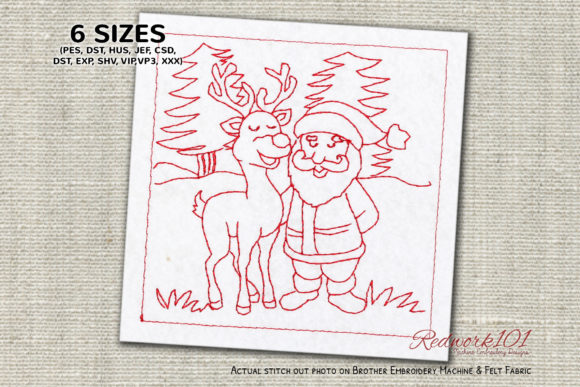
As an embroidery designer who has spent years digitizing files for small business owners, I approach every new machine embroidery design with a critical eye. It is not just about whether a motif looks cute on a screen; it is about how it performs in the real world of commercial production. When I first opened the Santa Claus with Deer Lineart Design, my immediate impression was one of charming simplicity. This piece captures the essence of the holiday season without relying on excessive detail that often leads to stitching nightmares.
The description highlights this as a redwork style piece, which immediately signals efficiency and clarity to any seasoned decorator. Redwork, traditionally stitched in a single color, relies heavily on clean lines and negative space. For small business merch, this is a significant advantage. It means faster run times, lower thread consumption, and a timeless aesthetic that appeals to a broad demographic. The optional box stitch mentioned in the product details adds a layer of versatility, allowing you to frame the design for a more structured look or leave it open for a softer, organic feel.
Visual Personality and Brand Fit
The visual personality of this digital embroidery file leans towards friendly, rustic, and handmade. It does not scream "corporate" in a cold sense, but it certainly projects professionalism through its clean execution. For boutique owners, Etsy sellers, and creative studios, this design serves as an excellent asset for building a warm, inviting brand identity. It feels approachable and nostalgic, which are powerful emotions during the Christmas season.
When evaluating this for brand identity, consider how line art interacts with your existing logo suite. If your brand uses heavy, bold fonts, this delicate line work provides a nice contrast. If your brand is already whimsical, this design reinforces that narrative. The key here is consistency. Using a cohesive set of design assets ensures that your customers recognize your products instantly, whether they are browsing your online store or seeing your staff at a local holiday market.
Real-World Applications for Small Businesses
Let us move beyond theory and discuss where this design truly shines in a commercial setting. The versatility of a line art design allows it to be adapted across various substrates and products.
- Embroidered Patches: This is perhaps the strongest use case. A clean outline translates beautifully to a patch format. You can create limited edition holiday patches for jackets or bags. The optional box stitch helps define the edges, making the patch easier to cut and finish professionally.
- Custom Apparel and Uniforms: Imagine this stitched on the left chest of a barista’s apron or a boutique owner’s cardigan. It acts as a subtle festive accent that does not overwhelm the garment. For apron embroidery, the redwork style stands out well against denim or canvas fabrics commonly used in cafes and bakeries.
- Cap Embroidery: Caps are tricky due to the curved surface and limited space. Because this design is primarily line-based, it avoids the puckering issues associated with high-density fills. However, you must ensure the scale is appropriate so the details do not get lost in the curve.
- Tote Bag Design: Holiday shoppers love reusable bags. Stitching this motif on a natural cotton tote creates an instant best-seller. The simplicity of the design keeps production costs low while maintaining high perceived value.
Technical Considerations and Production Notes
While the design is user-friendly, there are technical aspects every embroidery shop must address before running a large batch. The product description notes that the box stitch is optional and mentions color variables, but it does not specify exact stitch counts or recommended hoop sizes. As a professional, I advise you to check these details in the actual file metadata before committing to production.
Stitch density is crucial for line art. If the digits are too sparse, the threads may shift or gap on loose-weave fabrics. If they are too dense, you risk perforating the material. Always test this design on the specific fabric you intend to use. For example, stitching on a textured towel requires different tension settings than stitching on a smooth poly-cotton blend.
Another critical factor is stabilizer selection. For lightweight fabrics like t-shirts or thin tote bags, a cut-away stabilizer is often necessary to prevent distortion, even with a light design like this. For heavier materials like denim jackets or canvas bags, a tear-away might suffice, but always perform a pull test after washing to ensure longevity.
Challenges with Small Scale and Dark Fabrics
One area where you must exercise caution is scaling. While line art is generally scalable, going too small can cause the needle to punch through the same hole multiple times, leading to thread breaks or bird nests. If you plan to use this as a tiny label or a small chest logo, verify that the minimum stitch length remains viable. Additionally, consider thread colors carefully. On dark uniforms, a traditional red thread might not pop enough. You may need to switch to a brighter crimson or even a metallic gold to ensure visibility and contrast.
Frequent washing is another concern for items like aprons and work shirts. Ensure that the start and end points of the embroidery are securely locked. A loose tail on a line art design can unravel quickly under industrial laundering conditions.
Enhancing Customer Trust and Product Value
Using high-quality embroidery contributes significantly to customer trust. A sloppy stitch-out suggests a lack of care, while a crisp, clean design implies premium quality. The Santa Claus with Deer Lineart Design, when executed correctly, elevates a simple item into a cherished keepsake. For handmade product sellers, this distinction is vital. It transforms a generic tote bag into a branded experience.
To maximize this effect, create a printable mockup for client approval before stitching. Show them how the design looks on different colored fabrics. This visual aid helps manage expectations and reduces the likelihood of revisions later. It also demonstrates your professionalism, reinforcing the value of your services.
Final Verdict for Commercial Use
In conclusion, the Santa Claus with Deer Lineart Design is a solid addition to any embroidery library focused on seasonal merchandise. Its strength lies in its simplicity and adaptability. It works well for commercial embroidery projects where speed and reliability are paramount. Whether you are creating gifts for loyal customers, branding staff uniforms, or launching a new line of holiday decor, this design offers a balanced mix of charm and practicality.
Remember to verify the specific file formats and licensing terms provided with the download. Ensure you have the right to use the design for commercial purposes if you are selling finished goods. Test it on your specific machinery, adjust your tension and stabilizer accordingly, and watch how this festive motif brings joy to your customers while streamlining your production workflow. With careful attention to detail, this design can become a staple in your holiday collection for years to come.