Squirrel in Flowers Redwork: A Designer’s Review
As an embroidery designer who has spent years digitizing and testing files for commercial use, I approach every new machine embroidery design with a critical eye. It is not enough for a design to look cute on a screen; it must perform under the needle, withstand washing, and elevate the brand it represents. Today, I am reviewing Squirrel in Flowers Redwork, a charming piece from the Woodland Animals category, specifically evaluating its potential for small business merchandise and branded patch applications.
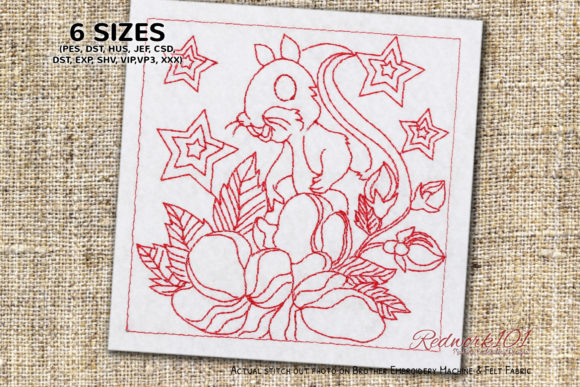
The first impression of this design is one of rustic warmth and approachable elegance. The concept features a lovely little squirrel standing amidst a floral bundle, executed in the classic redwork style. For boutique owners, café operators, and handmade brands, this aesthetic strikes a perfect balance between professional polish and playful charm. It does not scream for attention with aggressive colors or complex shading; instead, it invites closer inspection with clean lines and organic shapes. This makes it an excellent candidate for businesses that want to project a friendly, community-focused, or eco-conscious image.
Visual Personality and Brand Alignment
When considering brand identity, consistency is key. Squirrel in Flowers Redwork offers a versatile visual personality. It feels both classic and modern, depending on how you frame it. The redwork technique, traditionally done in a single color thread on a light background, lends itself beautifully to minimalist branding. If your business values simplicity, heritage, or natural materials, this design aligns perfectly. It avoids the clutter often found in multi-color designs, ensuring that the logo remains legible even from a distance.
For Etsy sellers and crafters, this design can serve as a signature mark. Whether you are selling homemade jams, artisanal soaps, or knitted goods, attaching a patch featuring this squirrel adds a layer of perceived value. It transforms a simple product into a handmade product with a story. The floral elements soften the image, making it suitable for florists, bakeries, and pet brands alike. It suggests care, attention to detail, and a connection to nature.
Performance in Real Business Applications
In my experience, the true test of any embroidery file is its versatility across different substrates. Here is how Squirrel in Flowers Redwork performs in various commercial scenarios:
- Embroidered Patches: This is perhaps the strongest application. The clear outlines of the squirrel and flowers translate well into satin stitch borders or fill stitches on a twill backing. A patch allows customers to remove the branding if they wish, or collect multiple designs, which drives engagement.
- Apron Embroidery: For cafes and studios, staff uniforms are walking billboards. This design works wonderfully on the chest pocket or lower corner of an apron. The single-color nature of redwork means it is cost-effective to produce in bulk, keeping your small business merch budget in check.
- Tote Bag Design: Canvas totes are staples for retail shops. The sturdy texture of canvas holds embroidery well. Placing this design centrally or on the corner creates a stylish accessory that customers will actually use, extending your brand’s reach beyond the store.
- Cap Embroidery: While possible, caps require careful placement. The curved surface of a baseball cap can distort detailed designs. However, because this design relies on bold outlines rather than fine gradients, it can work on the front panel if scaled appropriately.
It is important to note that the product description mentions an optional Stitch Box. In a business context, adding a border can help frame the design and provide a clean edge for cutting out patches. However, ensure the box color contrasts sufficiently with your fabric. As noted, the outer box color varies, so always request a preview or test stitch to confirm visibility against your specific material.
Technical Considerations and Limitations
No design is without its challenges. When using Squirrel in Flowers Redwork for commercial embroidery, you must consider stitch density and fabric interaction. Redwork designs typically use running stitches or light fills. On loose-weave fabrics or thin cottons, this can lead to puckering if not properly stabilized. Always use a cut-away or tear-away stabilizer appropriate for your fabric weight.
Additionally, be cautious with size reduction. If you plan to use this as a tiny label on clothing tags or small jewelry pouches, test it thoroughly. The details of the squirrel’s face and the individual petals must remain distinct. If the design becomes a blob of thread at 1.5 inches wide, it loses its professional appeal. I recommend creating a printable mockup at actual size to visualize the clarity before committing to production.
Dark uniforms present another challenge. Traditional redwork is designed for light backgrounds. If you are embroidering on navy or black apparel, you will need to switch the thread color to white, cream, or a bright contrasting hue. Ensure that the contrast is high enough to maintain legibility. Do not assume the default red thread will work on all garments.
Enhancing Customer Trust and Product Value
Why does this matter for your bottom line? Because quality embroidery signals quality products. When a customer sees a crisp, well-executed Squirrel in Flowers Redwork on a tote bag or apron, they subconsciously associate that precision with your core business offerings. It builds trust. It shows that you care about the details. This is crucial for custom apparel and branded gifts where the item itself is a representation of your brand’s standards.
Furthermore, unique design assets like this help differentiate you from competitors using generic clip art. By investing in a specialized digital embroidery file and testing it rigorously, you create a proprietary look that cannot be easily replicated. This exclusivity can justify higher price points for your merchandise.
Practical Designer Notes for Production
Before you launch this design into your product line, follow these steps to ensure success:
- Test in Monochrome: Stitch out the design in black thread on white fabric first. This reveals any gaps in coverage or awkward jumps without the distraction of color.
- Check Hoop Size Compatibility: Verify that the design fits within your machine’s standard hoop sizes. If resizing is necessary, do so in small increments to avoid distorting the aspect ratio.
- Evaluate Thread Colors: Choose thread colors that match your brand palette. Earth tones, deep greens, or classic reds work well with the woodland theme.
- Confirm Licensing: Always review the license terms associated with the embroidery file. Ensure you have the right to use it for commercial purposes, especially if you are selling the finished items.
- Create Client Mockups: If you are doing this for a client, provide a digital mockup showing the design on their specific garment type. This manages expectations and reduces revision requests.
In conclusion, Squirrel in Flowers Redwork is a strong contender for small businesses looking to add a touch of whimsical professionalism to their merchandise. It is versatile, cost-effective, and visually appealing. By paying attention to technical details like stabilizer choice and thread contrast, you can leverage this design to create high-quality finished product items that resonate with your customers. Whether used on a barista’s apron or a shopper’s tote, this design tells a story of care and creativity that aligns perfectly with the values of modern handmade and boutique brands.